Unlocking Success: Navigating Prop Firm Challenge Payments from Vietnam/Indonesia
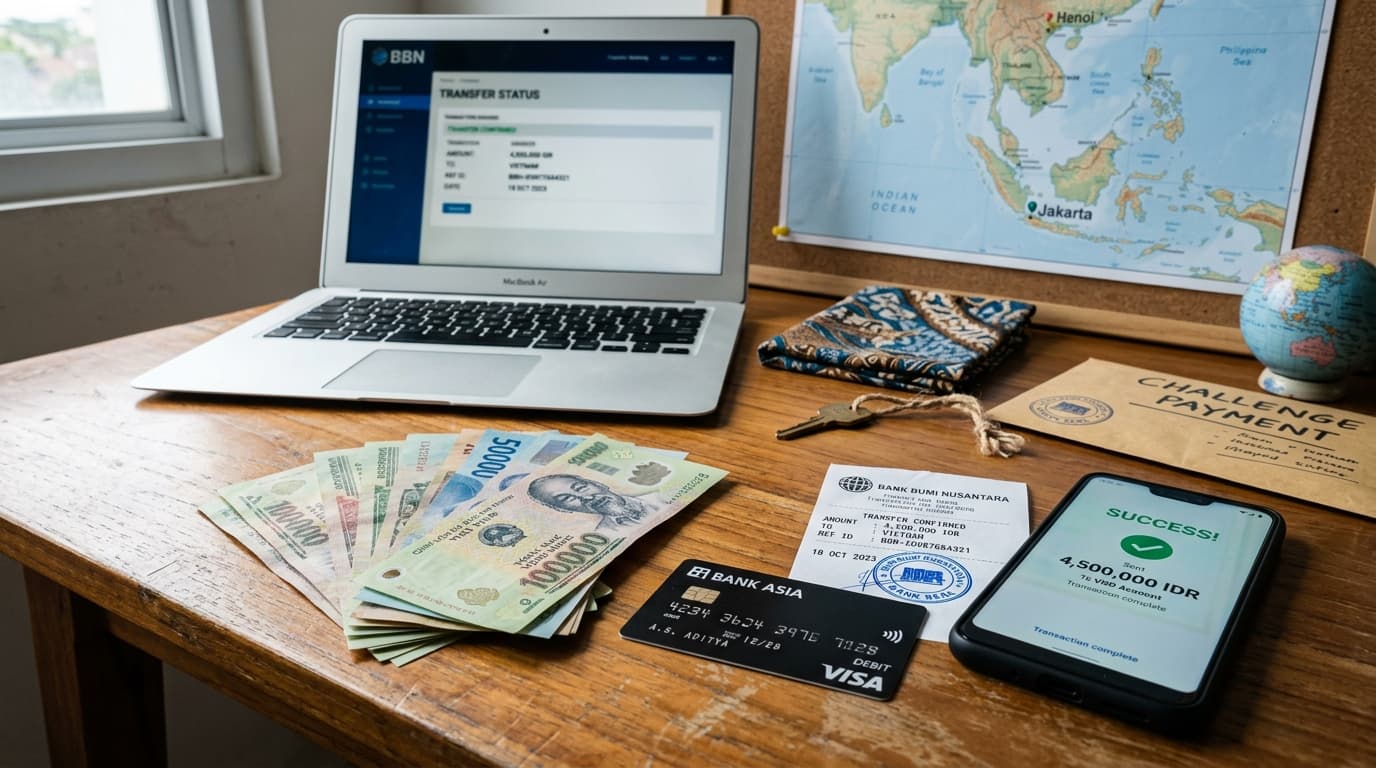
For traders in Vietnam and Indonesia, accessing proprietary trading capital represents a genuine opportunity — but the path begins with a payment. Prop firm challenge fees are the entry point to funded trading programs, and navigating cross-border transactions from Southeast Asia introduces layers of complexity that many new traders underestimate. Understanding payment infrastructure, currency regulations, and compliance requirements is essential before committing any funds to a challenge program.
What Are Prop Firm Challenge Payments?
How the Challenge and Funding Model Works
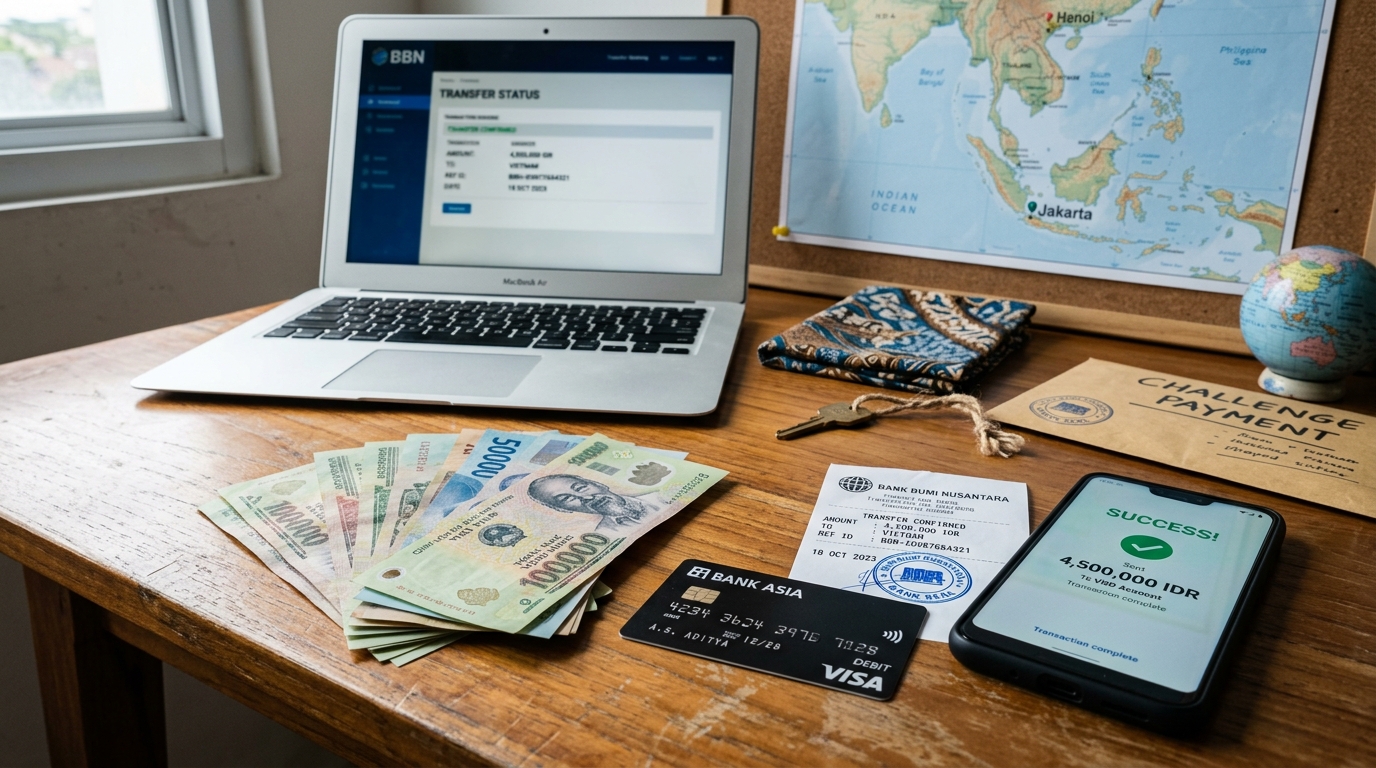
Prop firm challenges require traders to pay an upfront fee to access a simulated trading environment where they must demonstrate consistent profitability within defined rules. If successful, the trader receives access to a funded account and shares profits with the firm — without risking personal capital beyond the initial challenge fee.
"The challenge fee is not a deposit — it is a service fee paid for the evaluation process. Traders should treat it as a business cost, not a recoverable investment, unless a specific refund policy applies."
Common Payment Methods Used by Traders in Vietnam and Indonesia
Payment options vary by prop firm, but traders in both countries typically rely on a combination of digital wallets, cards, and cryptocurrency to complete transactions.
| Payment Method | Availability in Vietnam | Availability in Indonesia | Notes |
|---|---|---|---|
| Credit/Debit Card (Visa/Mastercard) | Widely available | Widely available | Subject to international transaction limits |
| PayPal | Limited | Limited | Restricted in some cases |
| Cryptocurrency (USDT, BTC) | Commonly used | Commonly used | Bypasses local banking restrictions |
| Wire Transfer (SWIFT) | Available | Available | Higher fees, slower processing |
| Local E-Wallets (MoMo, GoPay) | Vietnam only | Indonesia only | Rarely accepted directly by prop firms |
Why Prop Firm Challenge Payments Matter for Southeast Asian Traders
Currency Controls and Cross-Border Payment Considerations
Cross-border payments from Vietnam and Indonesia carry specific regulatory weight. Both countries maintain capital controls that can affect how much money residents send abroad and through which channels. In Vietnam, the State Bank of Vietnam monitors foreign currency outflows, while Bank Indonesia enforces foreign exchange regulations that impact international transfers. Traders must understand these restrictions to avoid failed transactions or compliance issues.
Transaction limits, reporting thresholds, and approved payment corridors all influence which payment methods are practical and legal.
Understanding KYC, Compliance, and Regional Financial Regulations
"Know Your Customer requirements are not bureaucratic obstacles — they are the foundation of legitimate cross-border financial activity. Traders who prepare documentation in advance experience significantly fewer payment delays."
Prop firms operating internationally require KYC verification before processing payouts or confirming funded accounts. For traders in Vietnam and Indonesia, this means submitting government-issued identification, proof of address, and sometimes source-of-funds documentation. Regulatory compliance differs between countries, and understanding your local obligations is as important as meeting the firm's requirements. You can review more financial information about your country, including currency controls and regional financial data, at Asia Markets Guide to better prepare for these requirements.
Key Components of Making and Managing Prop Firm Challenge Payments
Before initiating any prop firm challenge payment from Vietnam or Indonesia, traders should work through a structured checklist:
- Confirm the prop firm accepts payment methods available in your country.
- Verify the total fee amount in USD and calculate the equivalent in VND or IDR using current rates.
- Review the firm's refund policy in detail — some firms offer fee reimbursement upon passing, while others do not.
- Check whether your bank or e-wallet imposes international transaction restrictions.
- Confirm KYC documentation requirements before paying to avoid account holds.
- Record all transaction IDs and payment confirmations for dispute resolution.
Fee Structures, Refund Policies, and What to Verify Before Paying
Challenge fees typically range from $50 to over $500 depending on account size. Some firms offer fee refunds upon successfully passing the evaluation — this is a meaningful distinction. Always read the terms carefully, as refund eligibility often depends on strict rule adherence throughout the challenge period.
Managing Exchange Rates and Transaction Costs
Exchange rate fluctuations between USD and VND or IDR can meaningfully affect the real cost of a challenge fee. A weaker local currency increases the effective cost in domestic terms. Cryptocurrency payments denominated in USDT can reduce this exposure, though network fees still apply. Factor all transaction costs — including conversion spreads and intermediary fees — into your total payment calculation.
How to Successfully Navigate Prop Firm Challenge Payments from Vietnam and Indonesia
Step-by-Step Overview of the Payment and Verification Process
Preparation is the most underrated part of the payment process. Begin by confirming your chosen payment method supports international transfers at your required amount. Complete KYC submission before paying where possible, as verification delays can affect challenge start dates. Use stablecoins if local banking restrictions create friction, and always retain payment receipts. Confirm account activation with the firm directly after payment clears.
Common Challenges Traders Face and How to Approach Them
Failed transactions are the most common issue traders encounter, often caused by bank-level blocks on international payments. Currency conversion errors can result in underpayment, which delays account activation. Traders should also be aware that KYC rejections frequently stem from mismatched documentation — ensure your name appears consistently across all submitted materials. For country-specific financial data including payment regulations, visit Asia Markets Guide to review regional financial information relevant to your situation.
Conclusion
Prop firm challenge payments from Vietnam and Indonesia require more than simply sending a fee — they demand awareness of currency controls, KYC obligations, and transaction costs. Traders who approach the payment process methodically, verify terms in advance, and understand their regional financial environment are far better positioned to begin their funded trading journey without unnecessary delays.
Frequently Asked Questions
Can traders in Vietnam and Indonesia pay prop firm challenge fees using cryptocurrency?
Yes. Cryptocurrency, particularly USDT, is widely used by traders in both countries to bypass local banking restrictions on international transfers. It is one of the most practical payment options available.
Are prop firm challenge fees refundable?
Refund policies vary by firm. Some return the fee upon successfully passing the evaluation; others do not. Always verify this before paying.
Why is KYC important for prop firm payments?
KYC verification confirms your identity for cross-border compliance purposes. Incomplete documentation can delay account activation or block payouts entirely.
Educational & Risk DisclaimerThis content is for educational purposes only and is not financial or investment advice. Trading involves risk, and you may lose your capital. Always do your own research before making financial decisions.