How "China Plus One" strategies are boosting the IDR (Indonesia) and VND (Vietnam).
Introduction
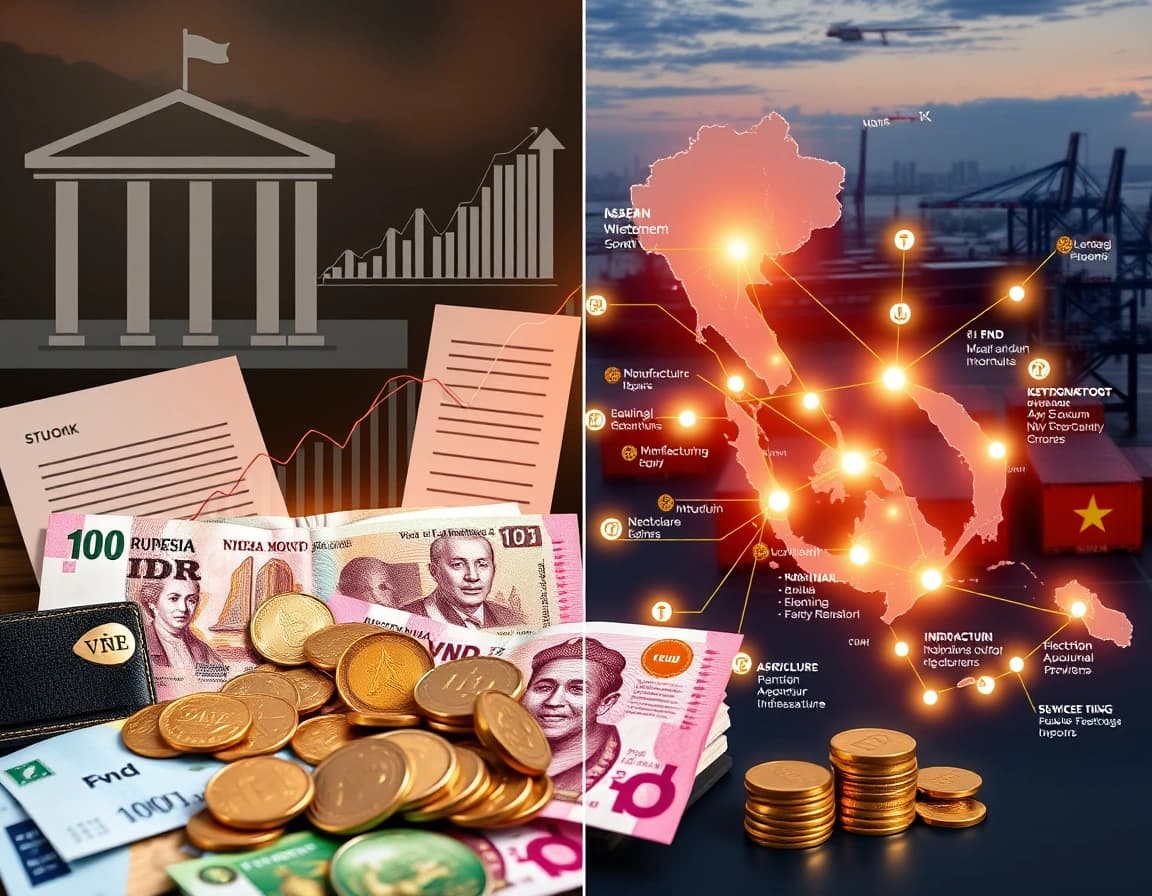
Global supply chains are shifting, and Southeast Asia is at the center of that transformation. As multinational companies reduce their dependence on a single manufacturing hub, currencies like the Indonesian Rupiah (IDR) and Vietnamese Dong (VND) are feeling the effects. For traders in Asia and beyond, understanding how ASEAN diversification is reshaping currency dynamics offers a meaningful edge in navigating emerging market positions.
What Is ASEAN Diversification and the China Plus One Strategy
ASEAN diversification refers to the deliberate spread of manufacturing and investment activity across Southeast Asian economies, rather than concentrating operations in one country. It is closely linked to the China Plus One strategy, a corporate approach where businesses maintain Chinese operations while simultaneously building capacity elsewhere.
The Origins of China Plus One Thinking
The China Plus One concept gained traction after a series of disruptions — rising Chinese labor costs, trade tensions, and pandemic-era supply chain failures — exposed the vulnerability of single-country dependency. Companies began seeking alternative production bases that could offer competitive costs, skilled labor, and favorable trade agreements.
How ASEAN Diversification Fits Into the Global Supply Chain Shift
Indonesia and Vietnam emerged as primary beneficiaries, attracting manufacturers from electronics, textiles, and automotive components. Their young workforces, improving infrastructure, and government incentives made them natural destinations for companies executing supply chain rebalancing at a global scale.
Why ASEAN Diversification Matters for IDR and VND
"Currency strength in emerging markets often follows capital — and capital is increasingly following the supply chain into Southeast Asia."
| Indicator | Indonesia (IDR) | Vietnam (VND) |
|---|---|---|
| FDI Inflows (2023 estimate) | ~$47 billion | ~$36 billion |
| Key Export Sectors | Nickel, palm oil, electronics | Electronics, garments, footwear |
| Manufacturing Growth Rate | ~5.2% annually | ~6.8% annually |
| Primary Investor Nations | Japan, Singapore, China | South Korea, Japan, Singapore |
Foreign Direct Investment Flows Into Indonesia and Vietnam
Foreign direct investment is a primary transmission channel between ASEAN diversification and currency performance. As capital enters both economies to fund factories, logistics hubs, and supplier networks, demand for local currency rises to pay workers, purchase land, and settle domestic contracts.
Currency Demand and Trade Settlement Effects
Increased export activity also drives trade settlement demand for IDR and VND. When Vietnamese electronics or Indonesian nickel products are exported, portions of those transactions create sustained buying pressure on local currencies, contributing to gradual structural appreciation over time.
Key Components Driving IDR and VND Strength
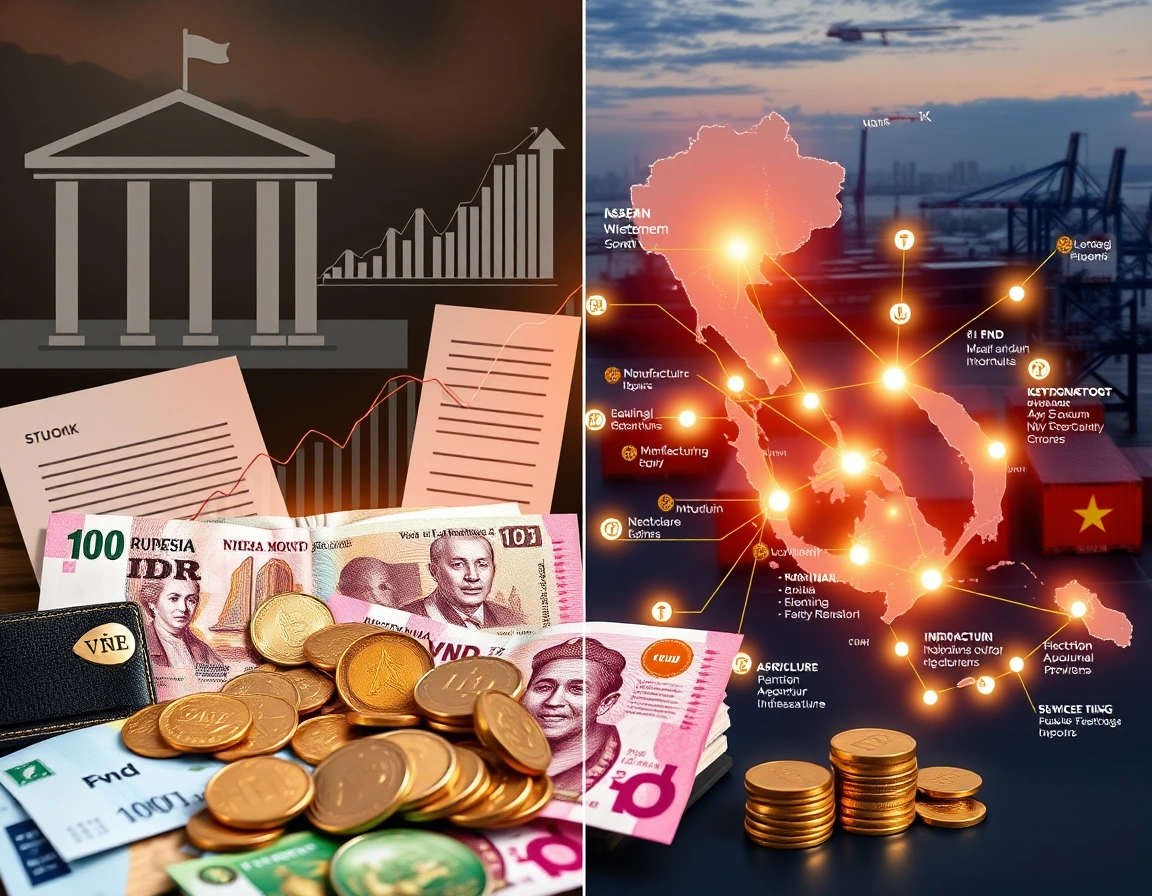
Several interconnected forces are reinforcing currency demand in both economies. Understanding these components helps traders assess whether moves in IDR or VND reflect durable fundamentals or short-term flows.
- Manufacturing relocation from China into Vietnamese industrial zones
- Rising nickel and commodity export revenues supporting Indonesian trade balances
- Expanding domestic consumer markets attracting retail and services investment
- Government-led special economic zones offering tax incentives to foreign manufacturers
- Growing regional trade agreements reducing friction for export-oriented businesses
Supply chain anchoring is particularly significant — once a manufacturer establishes local supplier relationships, capital flows tend to become more persistent rather than speculative.
Manufacturing Relocation and Export Growth
Export volume growth directly strengthens the trade balance, reducing downward pressure on currencies. Vietnam's electronics exports, dominated by companies like Samsung and Intel, have made VND export demand a structural feature rather than a cyclical one.
Infrastructure Investment and Its Currency Implications
Infrastructure spending — ports, roads, industrial parks — requires sustained local currency purchases over multi-year project timelines. In Indonesia, ongoing Jokowi-era infrastructure programs created consistent IDR demand well beyond initial FDI announcements.
How ASEAN Diversification Works in Practice for Traders
"Structural currency stories unfold over years, not weeks — traders who confuse a macro theme with a short-term signal often take on more risk than they realize."
ASEAN diversification is a macro theme, meaning its currency effects accumulate gradually. Traders should treat it as a directional backdrop rather than a precise entry trigger.
Reading Economic Indicators Tied to Supply Chain Shifts
Monitoring purchasing managers' index (PMI) readings, FDI approval data, and export growth figures provides practical signals. When Vietnamese manufacturing PMI consistently exceeds 50 while FDI approvals rise, it suggests the underlying theme is strengthening rather than stalling.
Understanding the Risks Behind Currency Movements
Emerging market currencies carry risks that can override positive fundamentals. Political instability, commodity price reversals, or a sudden shift in US Federal Reserve policy can pressure IDR and VND regardless of supply chain momentum. Traders must weigh macro tailwinds against these countervailing forces carefully.
Important Considerations and Common Misconceptions
ASEAN diversification is frequently misread as a straightforward bullish signal for regional currencies. Several important nuances deserve attention before building positions around this theme.
A common misconception is that FDI inflows automatically strengthen currencies. In practice, if investment enters through equity markets or is hedged by foreign companies, the direct currency impact may be smaller than expected. The transmission mechanism matters.
Traders also sometimes overlook that VND is a managed currency. Vietnam's State Bank actively intervenes to maintain competitiveness, meaning appreciation is deliberately constrained even when fundamentals support it. IDR similarly experiences Bank Indonesia intervention during periods of volatility.
Another overlooked risk is concentration within the theme itself — if a trade dispute or regional geopolitical event affects multiple ASEAN economies simultaneously, diversification within the region offers limited protection. Treating IDR and VND as uncorrelated simply because they are different countries is an oversimplification that can expose traders to compounding losses.
Conclusion
ASEAN diversification and the China Plus One strategy are creating durable structural shifts in how capital flows into Indonesia and Vietnam. For traders, IDR and VND represent currencies backed by genuine economic momentum — but also real complexity. Approaching this theme with patience, proper risk management, and realistic expectations is essential.
Frequently Asked Questions
What does ASEAN diversification mean for currency traders?
It signals potential long-term demand for IDR and VND as foreign investment and export activity grow, though effects unfold gradually rather than immediately.
Is VND a freely traded currency?
No. VND operates under a managed float, meaning Vietnam's central bank actively limits appreciation to protect export competitiveness.
Does more FDI always strengthen a currency?
Not automatically. How investment enters and whether it is hedged significantly affects the actual currency impact.
Are IDR and VND safe emerging market investments?
Both carry meaningful risks, including political factors, commodity price swings, and central bank intervention that can override positive fundamentals.
Educational & Risk DisclaimerThis content is for educational purposes only and is not financial or investment advice. Trading involves risk, and you may lose your capital. Always do your own research before making financial decisions.